Whenever I talk about how work is changing, I get pushback, and I get why. I think it comes down to three things that are hard to see. The past: few of us were taught how we arrived at this moment, so the world we live in feels permanent. The present: news of what's happening on the frontier doesn't reach everyone equally; you have to make an effort to keep your finger on the pulse. And the future: nobody's intuition is built for exponentials, so it's hard to picture where this one goes next. This essay takes them in order.
Organized around the scarce thing
Before industrialization, most people worked where they lived. The farmer lived on the farm. The weaver sat at a loom in the front room. A merchant would drop off some wool and come back to collect it and pay for your work. Nobody told you when to start. The day stretched or shrank to fit the task, and the task was organized around you. 1
Then came the factory. I used to think of factories as these giant brick buildings with smoke blowing out of tall chimneys, but the first factories were about something simpler: getting everyone into one place at the same time, each person on one job, so the work could be watched and kept to a certain standard. 2 A bell rang, workers streamed in, manned their stations and performed their task until the bell rang again.
When the machines arrived they were expensive, and you want the most out of an expensive thing, so we organized our lives around the machines. We learned to live by the clock, because the clock kept the machine fed.
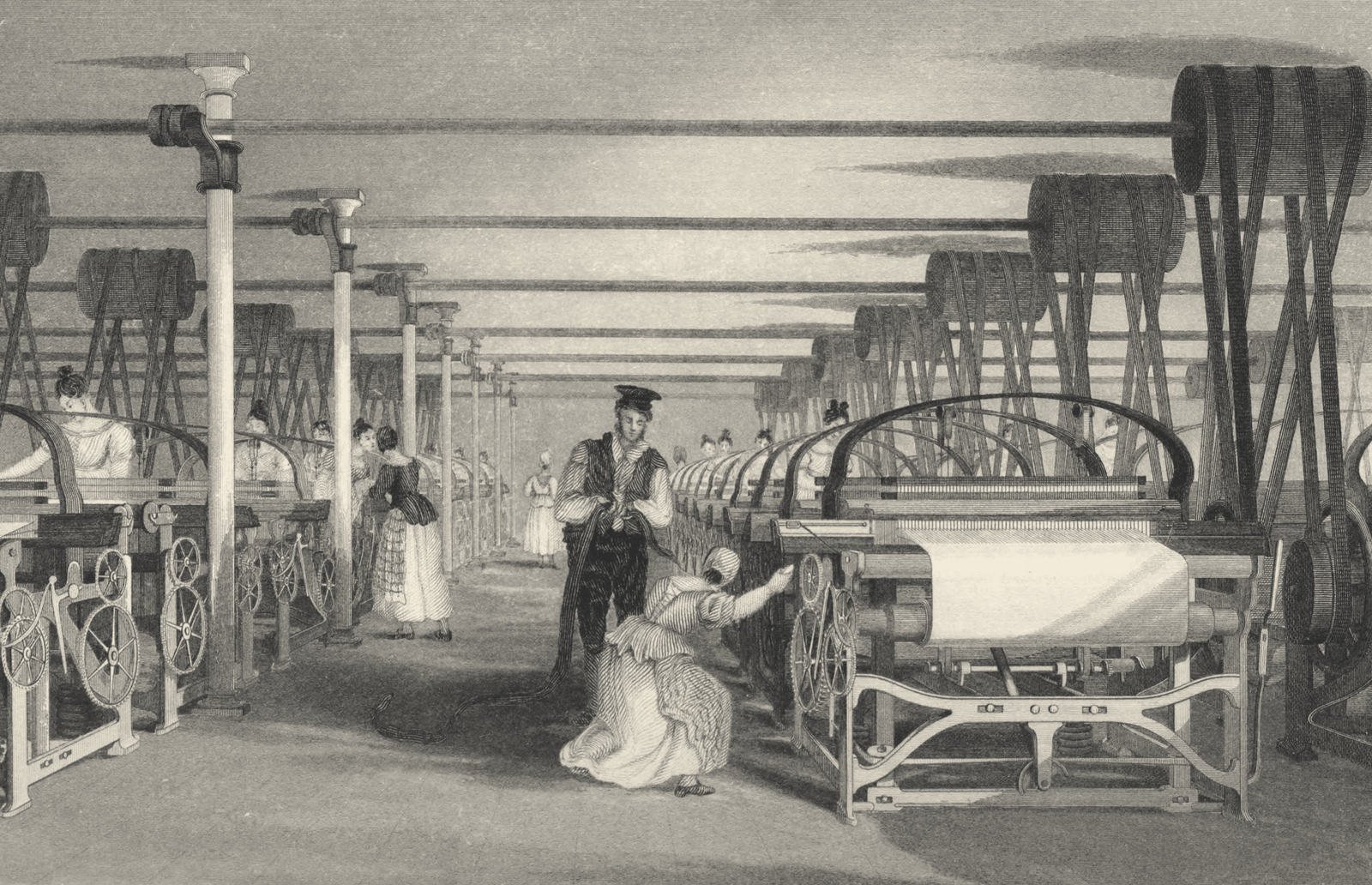

Then came the railroad: the biggest, richest organizations of their time, and very much the data center of their day. 3
But a factory is one place, in one location. A railroad is hundreds of miles of track, and the work has to happen across places, across time, all the time. Two trains on the same track going in opposite directions is not ideal, as you can imagine. Keeping them apart took timetables, telegraphs, rulebooks, reporting lines and, eventually, the org chart. 4 The railroads even reorganized time itself, carving North America into time zones in 1883. Coordination had become the most valuable thing, and modern management was born to engineer it into reality.
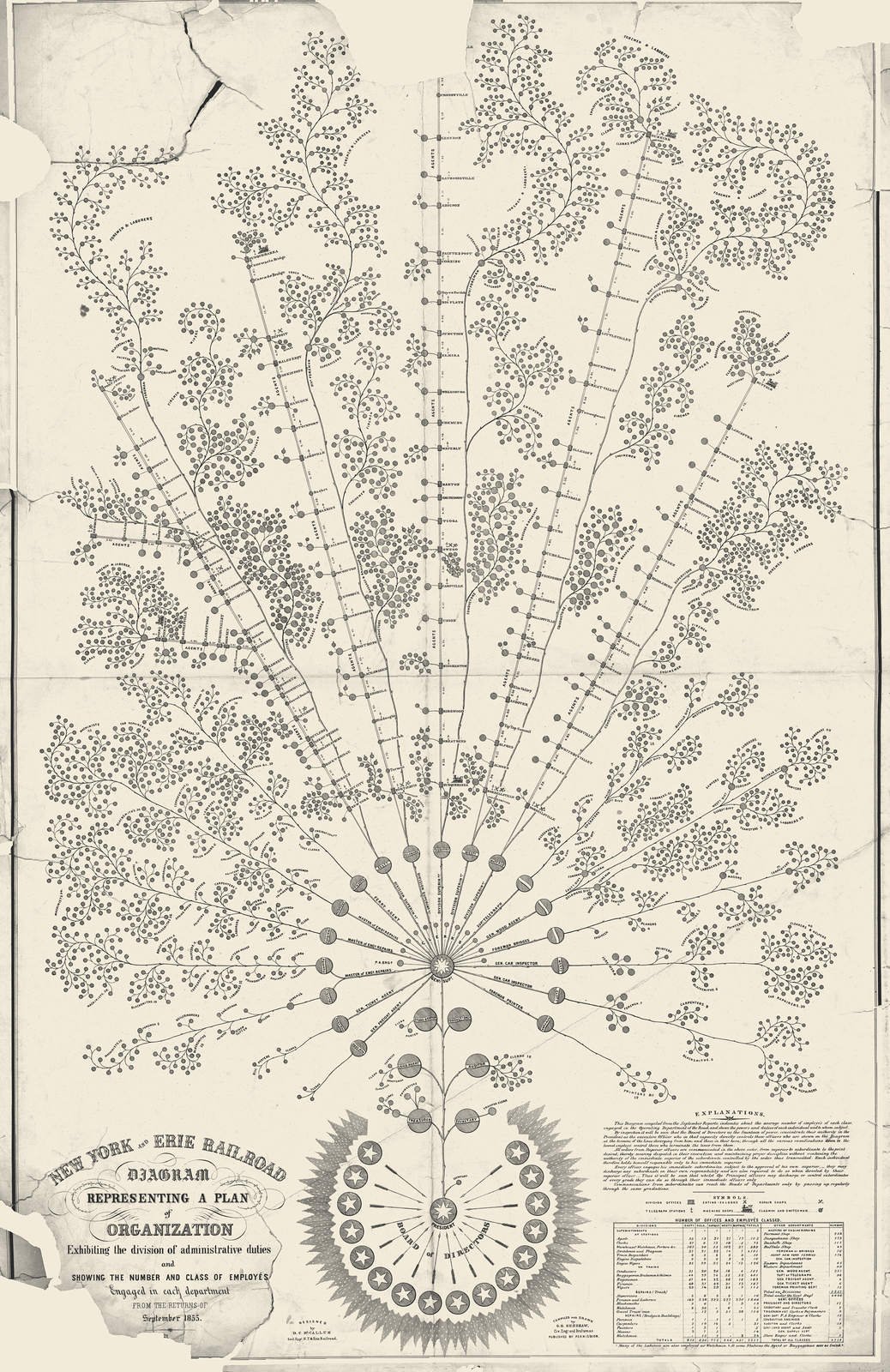

Some details have changed since. We have Microsoft Teams, Jira tickets, Asana, Salesforce and so on. But the logic underneath, coordinate first and slot people into functions, is not that different from the one the railroads started nearly two centuries ago. 5
Every era organized work around whatever was scarce: the craftsman's time, the machine, coordination across distance. That is about to change again.
What work looks like now
For about forty years, work at a computer looked roughly the same. You got to your desk, opened a piece of software and did the task in front of you. The moment the work actually happened, where the rubber met the road, was a person moving a cursor and pressing keys on their keyboard.
That isn't true anymore.
You don't have to type, or even sit at a desk
You speak far faster than you type, and the machine can transcribe it perfectly, in any language. 6 An agent on your computer reads files, runs commands, browses the web, uses whatever software the job needs and creates one if the right tool does not exist yet. You describe the outcome; it works out the steps. Did I mention you can trigger this from your phone? 7
Some agents don't even need your computer, or your trigger. In the past few months SpaceX's Grok Bot, OpenAI's Dots and Meta's Muse have started giving agents computers of their own in the cloud, working while you sleep. 8 One user forgot his Dot was running until it messaged him: a document he'd just written cited references that didn't exist, and it had fixed them. Don't let the cute names fool you. These are AI employees. Some are already more useful than a junior hire, and they improve at a rate no human will ever match.
Who's doing this? Everyone
This isn't a story about programmers. That was last year. In Anthropic's sample of more than a million sessions with its office agent, Cowork, less than a tenth were software. A third were business operations. 9
An accountant says their month now comes down to 10–20 hours: "All I do is gather the data, run my systems and then find myself in the reviewer role."
A litigation partner fed a 100,000-page document production to a legal AI and got back a spreadsheet of every unique document, by Bates number, date and description.
A marketing executive has "chained together six steps with five different skills" to turn the story of a talk into an on-brand deck. Every week her system checks the next 90 days of speaking dates, and each recording feeds the next talk.
A consultant watched a client build a deck with AI and present it to senior leadership with no consulting support at all. Nobody batted an eye, he wrote, and life moved on. 10
The agent can build the financial model inside Excel itself. Every formula works. The formatting? Perfect. It can draft the deck and write the report. So why would you build any of it by hand? Are you crazy? Let the agent do it. Sit and review. That is the job now.
Even the scientists, especially the scientists
The people building these systems are doing the same to their own work. A machine-learning PhD student says Claude "now writes most of my experiment scaffolding" and "I mostly read diffs and say yes."
In September OpenAI said it had reached its goal of an "automated research intern", with its research organization running 3.1 agent-workdays for every human workday. At Anthropic, so much code now ships that git, the system nearly every software team uses to track changes, couldn't keep up. In May it merged about 2,500 code changes a day. By September it was merging more than 30,000. So a team of seven built a replacement and moved the whole codebase onto it in five months. 11
I believe this is where the curve bends: the agents have started to speed up the making of the agents. That deserves its own essay. For now the point is simpler. If the people building the frontier mostly direct and review, what makes your job the exception?
More today than yesterday
Every month the agents do more, faster and for less. The length of task an agent can complete on its own has been doubling every few months. 12 Remember when the models came back with half-baked work, riddled with mistakes, needing your input at every step? Now they can cook for hours and come back with finished work.
Six months ago Opus 4.7 was the leading model, and I relied on it for serious work. Today I wouldn't use it for anything challenging even if you gave it to me for free. What is six months? Nothing. A business can spend two quarters fighting one fire and look up to find the nature of work has changed around it.
And almost nobody has noticed. Andrej Karpathy estimates that about six billion people have barely touched these models, a billion or two use a chatbot as a better search engine, and only around twenty million professionals use the frontier seriously: about 0.2% of the world. OpenAI says 1.2 billion people use ChatGPT every week. About 35 million use its agentic work products. That's 3% of the user base.
This deserves repeating: only 0.2% of the world, and 3% of the people who already use AI, are using it to the full. On the classic adoption curve we have only just moved past the innovators. 13 That is how early this is. Work is changing from the bottom up, one accountant, lawyer, marketer and researcher at a time, and it is going to change fast.
The bottleneck is us
There's a catch. The more work you hand off, the less of it you understand. Karpathy puts it plainly: "human review and comprehension are starting to fall behind." The slow part of the system is now us. What's scarce now is human judgment: the attention to review the work, and the authority to act on it. Which raises the question for the rest of this essay: if every person can now command this much capability, how should an organization be built around them?
March separately, fight together
Napoleon didn't win by marching one enormous army down one road, the way it had been done for centuries before. He split it into corps: self-contained units, each with its own infantry, cavalry, artillery and supplies, able to move and fight alone for days. They marched separately, so they could move fast and feed off different land, and they came together for the battle. A Prussian general, Moltke, later put the idea in four words: march separately, fight together. 14
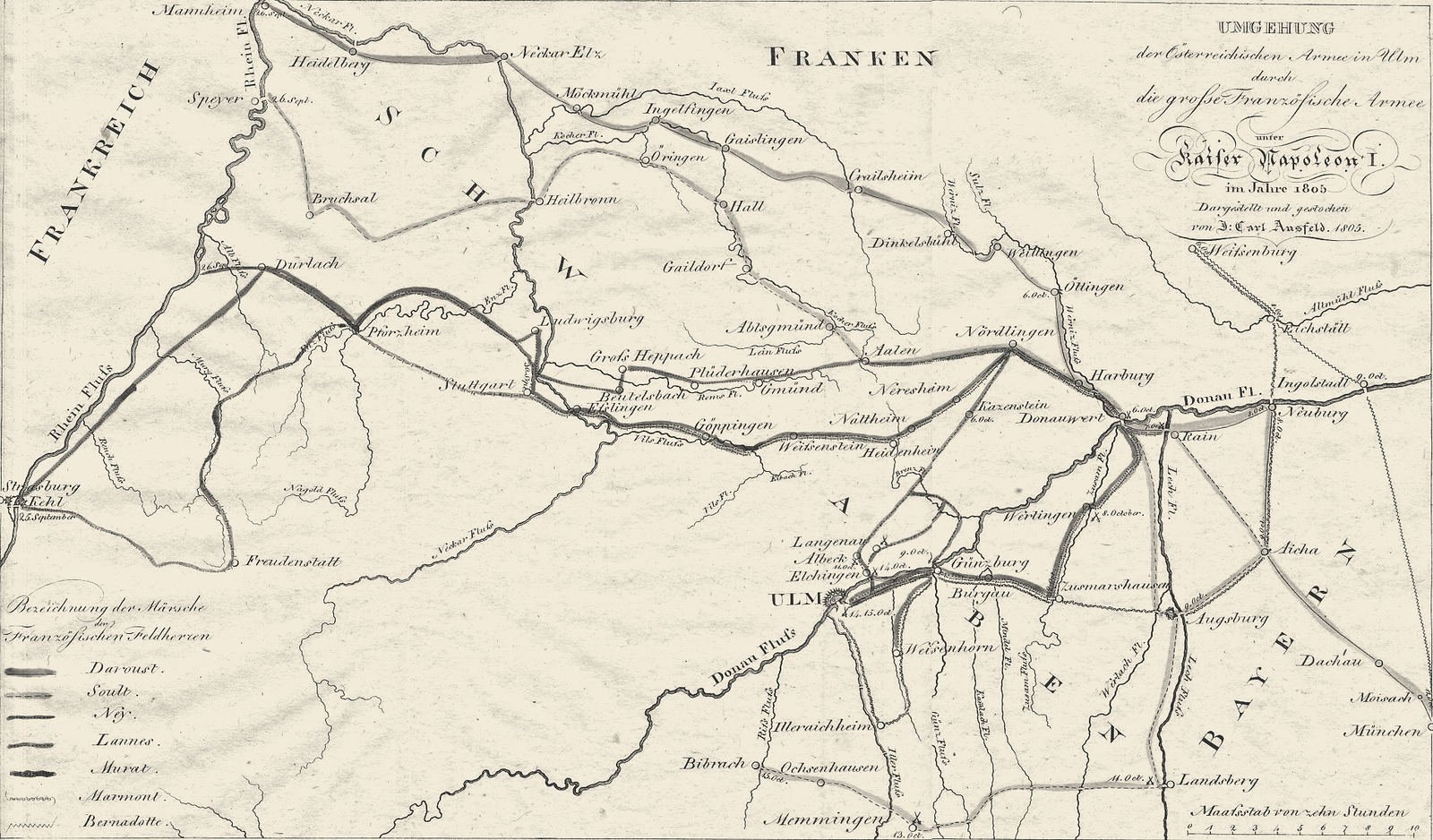

That is what an organization built around agents starts to look like.
The corps
Take an e-commerce startup where one leader has one job: the website should make more money. Break it down. More money means more traffic and better conversion. Traffic means being found: content worth citing, authority, on-page and off-page SEO. Conversion means the brand, the design, the copy, a compelling offer. Five years ago each of those was a hire, an agency or a ticket in someone else's queue. Now the leader requisitions each capability on demand (research, copy, design, front-end code, analytics) and marches on. In effect, one person now commands a whole corps: a specialist for every front.
It works for things you can hold, too. For a coffee project of my own, I dictated an idea into my phone. The agent wrote the CAD model as code and rendered it in Blender so I could check it. Then it sliced the model and sent it straight to the 3D printer. A few hours later I was holding the prototype. I didn't even have to sit down at my desk.
Every team on its own front
Now picture the whole company. Marketing brings people to the business, and sales turns them into customers. Operations gets purchase orders out to suppliers, so stock arrives before it runs out. Fulfilment picks, packs and ships every order on time. Finance keeps receivables and payables straight, files every return on schedule and reconciles the bank statements to the last cent. Each team marches on its own mission, with its own people and its own agents. And they fight together: every battle serves one fight, the business getting better.
Supply lines
This compounds because of what each team leaves behind. The loop has three parts. A skill does the job. A second agent checks it. Every correction gets written down, so the instructions get sharper and the next run starts from a higher baseline.
In finance, a skill pulls the numbers for a tax payment, drops them into the right tab, lets the formulas run the calculations and produces the PDF ready for filing. In hiring, a recruiter keeps a preference file for each role that sharpens with every round of feedback. In legal, one lawyer keeps his firm's entire operating knowledge in one folder of plain-text files: "Small files, one fact each, built up by correction." 15
Chats are ephemeral; files are permanent. Good businesses have always written things down in standard operating procedures, guidelines and handbooks. Skills, context and memory are the agent's version of the same thing. They let every new session pick up where the last one left off and build on it, instead of starting cold. Eventually models will hold ten or a hundred million tokens in context at once, or learn continuously, and the loop will only get faster. 16
Chain of command
Not everyone can work like this yet, and your job title has little to do with it. Two things decide it.
The first is authority. If you own an outcome and you're trusted to act, you can requisition capability and go. If you're one cog in a large machine, and your supervisor has to walk your request around the org chart to marketing, legal and finance, or whoever, you can't move fast. It's stifling. It's suffocating. Hand everyone frontier agents but keep the approval chains, and you get almost nothing. The limit is the org chart. 17
The second is reach: how much of your work the agents can touch. This one is temporary. Today agents are at home wherever work is text, code or commands: spreadsheets, accounting systems, CRMs, research, reports, even setting up a fluid simulation. They are weaker at continuous, hands-on screen work, like a design engineer living in CAD all day. That gap is closing fast. The labs are training their models on exactly this kind of work, and I expect it to be RL'd into oblivion. 18 So "AI can't help with what I do" holds for a narrow set of tasks today, and the set gets narrower every month.
The physical world is next, and it is closer than most people think. You can already order a humanoid robot for about $20,000. When it gets stuck, a person can remote in and take over, and one person can look after a whole fleet: Waymo runs roughly one remote assistant for every 40 cars.
The robots are also learning faster. Teaching one even a simple task used to take mountains of data. In September, Figure's robots did chores in 30 homes they had never seen, and one startup claims its robots pick up a new task from a few seconds of video. 19 I expect this to narrow within a year or two. The job you'd train a factory worker for weeks to do, a robot will soon learn in hours, then minutes.
What lasts longest is the relationship. An agent can brief the salesperson before the client dinner, and a robot may one day turn the wrench, but people still want to do business with people.
The war room
Much of the coordination moves to the agents, which hand off, check each other and keep the work moving. But people still need to be aligned, and that happens the old-fashioned way: get everyone in a room and talk it out. When marketing wants a discount, finance wants margin and fulfilment can't ship double next week, somebody has to decide. So meetings stay, and they get better. Everyone arrives having read their agents' briefing, and the meeting becomes what meetings were always meant to be, before they mutated into corporate theatre: discuss, align, decide, move on. 20
Recruits
For two centuries, growing meant hiring. Here it means more missions, and more capability per person. Junior hiring is already falling where agents do junior work best. At Anthropic, the junior share of technical hires fell from 27% to 9%, and hiring managers now favour "autonomy and judgment over domain expertise." 21
People still get hired, often to own whole new missions: a new market, a new product line, a new geography. But three tests apply. Do they bring a capability the team lacks and the agents won't reach in a few months? Can they join the peloton on day one, adding speed rather than needing to be carried? And are they already tapped in, fluent in the agents and harnesses the team runs on? The exceptional ones usually are. Adopting the frontier early is part of what makes them exceptional.
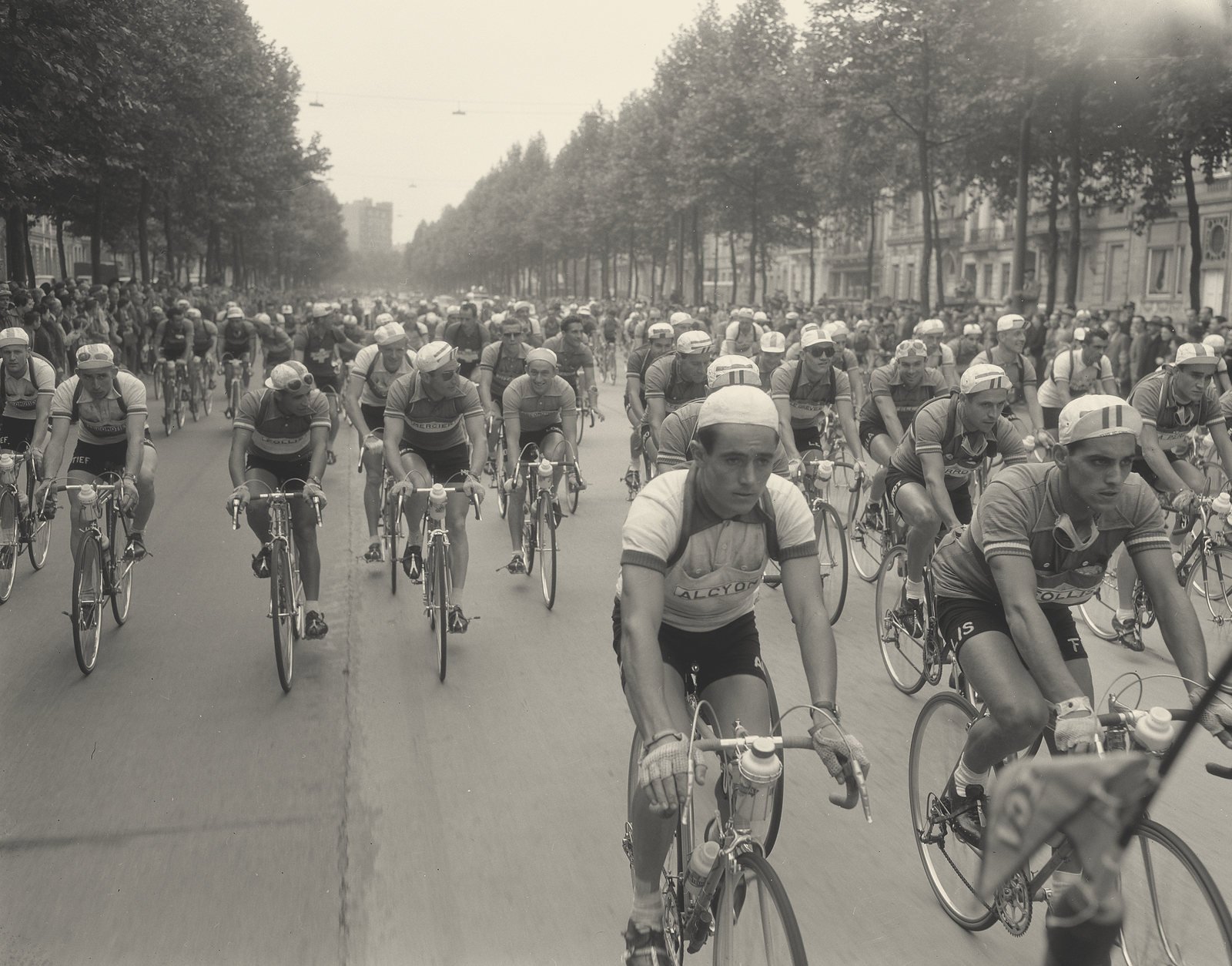

If nobody is hired to do junior work, where do the next mission owners learn the ropes? 22 At this pace, we may be the last generation to join the corporate world the way it used to work. What the next one walks into is anyone's guess, especially as the agents take on more of their own improvement. Maybe it's UBI. I wrote about what happens when a graduate pipeline breaks in The Gap That Built a Nation.
New motor, old shafts
Pearl Street
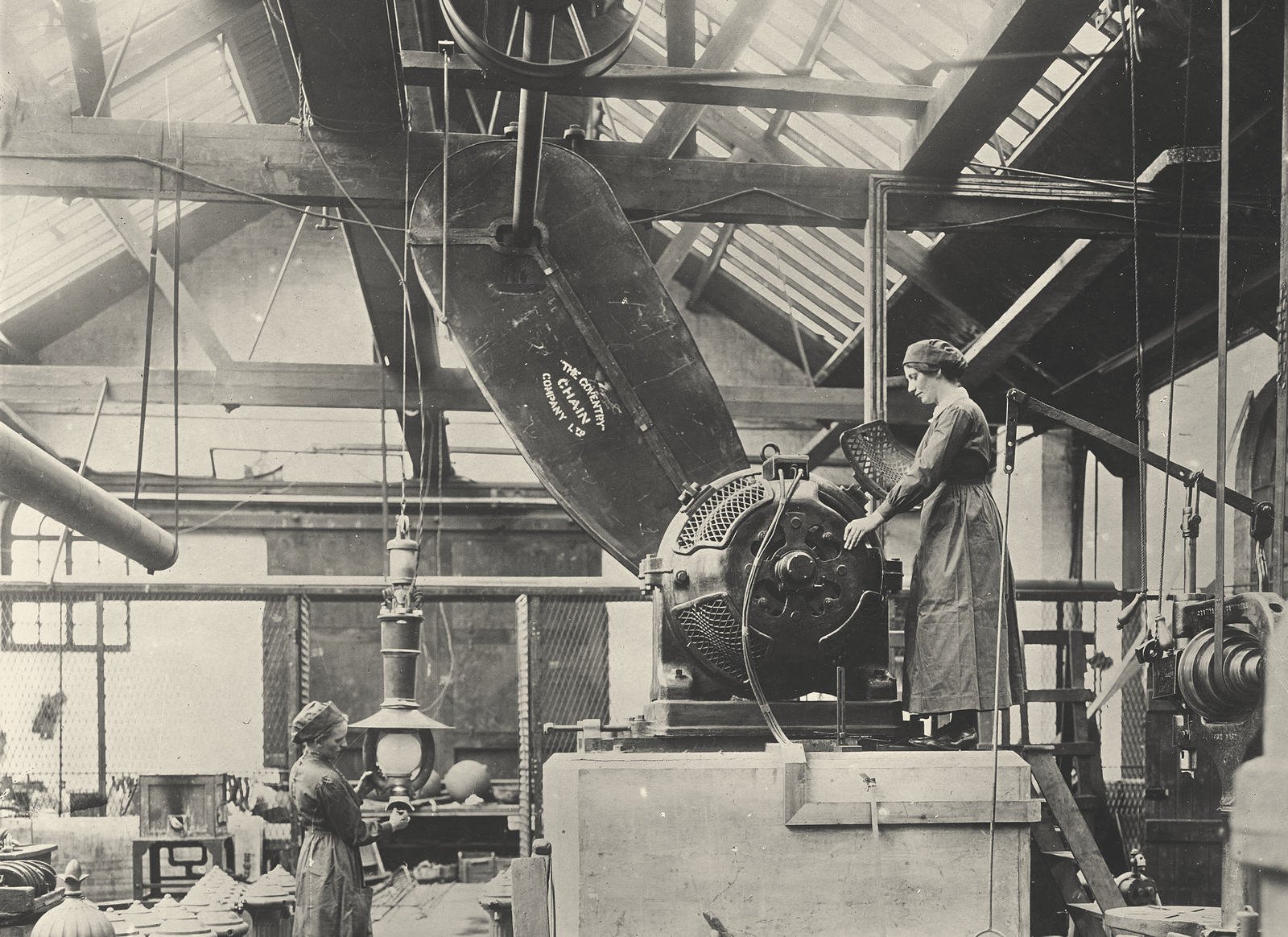
In 1882, Thomas Edison opened the Pearl Street power station in Manhattan. You might expect factories to have transformed within a decade. They didn't. Around 1900, electric motors drove less than 5% of the machinery in American factories. Most owners who did switch pulled out the steam engine and dropped a big electric motor in its place, still turning the same shafts and belts, in the same tall buildings laid out around them. Productivity barely moved. 23
.jpg)
The gains came only when factories were rebuilt around the new technology: a small motor on every machine, single-storey plants, work laid out by the flow of the job instead of the line of the shaft. That took until the 1920s, forty years after Pearl Street. The economist Paul David found the delay was economics: replacing a plant that still worked simply didn't pay. The old factory was paid for, and it was good enough.
That 5% should sound familiar. It's close to the 3% of ChatGPT's weekly users who use its agents for work today. Same stage, a century apart. The factories took eighteen years to get there, and we took under four. Most companies have bought the new motor and kept the old shafts. This time the rebuild is the organization itself: people who own an outcome, with the authority to act on it.
The invader
Meanwhile, something new is moving into the water. On Atlantic reefs the lionfish is an invader from the Indo-Pacific, and many native fish don't treat it as a threat, because they never evolved to recognise it. 24 An agent-native competitor looks the same way to an incumbent. Five people don't show up on a market map. They look like a freelancer, a side project, a rounding error. But they were built around the new motor from day one, with no old plant to protect.
Disruption has always worked like this. A rival has something structural in its business that lets it move faster and offer more for less, and the incumbent's inertia stops it from answering. Fighting the newcomer on its own terms rarely ends well for either side 25, and the incumbent may not be able to anyway. The question is what it does instead, and how many established companies have the agility to make deep sacrifices and turn on a sixpence.
Doing the job well
The hard part is that incumbents rarely fail because their leaders are stupid. They fail because those leaders are doing their jobs well. 26 A CEO hired into a mature company is there to steer the ship, not rock it: protect the margins, serve the best customers, hit the quarter. By the old scoreboard every one of those decisions is right. Even a leader who sees the storm coming needs their generals to believe it, because strategy only becomes action through them. If they don't buy in, the right plan still fails.
So adaptation isn't a given, and adapting badly can cost more than it saves. The patterns are already visible: 27
AI subscriptions for everyone 28, and the same approval chain.
Banning the models, and watching your best people use them on a personal laptop at home anyway.
Measuring tokens instead of work, so people perform the spectacle of adoption instead of actually doing it.
Billing by the hour, so every hour the agent saves comes straight out of your revenue.
Nobody sits this out
Does anyone get to sit this out? I struggle to see who. Freeze the technology today and a steel mill's furnace stays the same, but the purchasing, planning, finance and sales around it don't have to. Give it a decade and AI for science may change the furnace too, the way the Bessemer process, once Carnegie scaled it up in America, gave us the skylines, bridges and dams we take for granted today.
Electricity touched every industry. So did the internet. I believe this is bigger than both. It won't arrive everywhere at once, because some industries are more rigid and have different dynamics than others. But I think it arrives all the same.
For most of history, intelligence was the scarcest resource there was. Now we've started to mass-produce it, and what's scarce is the judgment to direct it and the authority to act on it.
Every time the scarce thing has changed, the organization built around it has changed too. Marching separately and fighting together is my best guess at the next shape. If you run a company, I'd start with a few questions.
- Who in your company can requisition capability today without asking anyone?
- How many approvals stand between a good idea and a shipped one?
- If you founded your company today, with agents, how many people would it have, and which of today's roles would exist?
- What did your most frontier-pilled employee build last month that you don't know about?
- Which of your competitors would you not recognise as a competitor?